How E-commerce Design Influences Buying Decisions
Most people think they buy things because they need them.
In reality, most people buy things because a website quietly convinced them to.
Not through persuasion in words, but through design.
The layout.
The colors.
The buttons.
The spacing.
The way information is revealed.
The way urgency is created.
E-commerce design doesn’t just display products.
It shapes behavior.
And most of the time, we don’t even notice it happening.
The Illusion of Choice
When you land on an online store, it feels like you’re in control.
You scroll.
You browse.
You compare.
You decide.
But what you see first, what you ignore, what feels “best”, and what feels “safe” is already filtered by design.
Design decides:
Which products are highlighted
Which ones feel premium
Which ones feel risky
Which ones feel popular
Which ones feel urgent
You’re not choosing from everything.
You’re choosing from what the design wants you to see.
First Impressions = Trust
People decide whether to trust a website in less than 5 seconds.
Not based on logic.
Based on feeling.
If a website looks outdated, cluttered, slow, or inconsistent, your brain labels it as unsafe.
You might not say it out loud, but you think:
“This site feels sketchy.”
And once trust is broken, conversion is almost impossible.
Good e-commerce design builds trust through:
Clean layouts
Professional typography
Consistent branding
High-quality images
Fast loading speed
Clear navigation
Before price.
Before reviews.
Before product details.
Trust comes first.
The Psychology of Product Pages
A product page is not just information.
It’s a sales environment.
Every element has a psychological role:
1. Images
High-quality images increase perceived value.
Multiple angles reduce uncertainty.
Lifestyle photos help customers imagine ownership.
If they can imagine themselves using it, they are already halfway to buying.
2. Price Placement
Where the price is positioned matters.
Big price near the product = attention.
Small price near the button = less friction.
Crossed-out prices trigger “discount psychology”.
Even if the discount is small.
3. Buttons
“Add to Cart” is not just a button.
Its:
Color
Size
Position
Contrast
All affect conversion.
A weak button = weak action.
If it blends into the background, the brain ignores it.
Good design makes the next step obvious.
Urgency and Scarcity
Design is very good at creating artificial pressure.
“Only 3 left in stock”
“Offer ends in 2 hours”
Countdown timers
Flash sales
These are not just marketing tactics.
They are behavior triggers.
The brain hates missing out more than it loves winning.
So urgency forces decisions before logic kicks in.
Simplicity Converts
The more complex a website feels, the less people buy.
Too many options → decision fatigue.
Too many steps → abandonment.
Too much text → confusion.
The best e-commerce designs are boring in a good way.
They remove friction:
Simple navigation
Clear categories
Straightforward checkout
Minimal forms
Obvious actions
Every extra step is a chance to lose a customer.
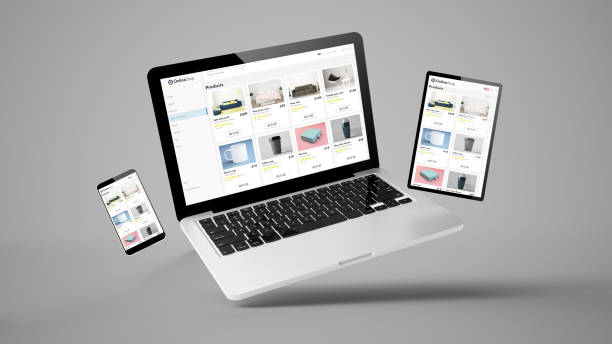
Mobile Design Is Not Optional
Most people now shop on their phones.
If your e-commerce site is not optimized for mobile:
Buttons too small
Text too dense
Images too slow
Checkout too long
You’re not losing traffic.
You’re losing money.
Mobile design influences purchasing more than desktop now.
Because convenience beats intention.
Color, Emotion, and Buying
Colors affect mood.
Mood affects decisions.
For example:
Blue → trust
Black → luxury
Red → urgency
Green → safety
Orange → action
Good e-commerce design uses color intentionally.
Not for beauty.
For psychology.
Social Proof and Design
Reviews are powerful.
But how they’re displayed matters more than the reviews themselves.
Star ratings near the product title.
Testimonials near the button.
User photos.
Real names.
Design turns opinions into persuasion.
If others bought it, your brain assumes it’s safe.
Bad Design Kills Good Products
Here’s the painful truth:
You can have a great product and still fail.
If the website:
Looks cheap
Feels confusing
Loads slowly
Feels untrustworthy
People won’t buy.
Not because the product is bad.
But because the design makes it feel bad.
Perception beats reality in online commerce.
The Role of UX (User Experience)
UX is the invisible part of design.
It answers questions like:
How fast can users find what they want?
How easy is checkout?
Where do users get stuck?
Where do they drop off?
Good UX removes thinking.
Bad UX creates friction.
And friction kills conversions.
Why This Matters for Businesses
Most businesses focus on:
Ads
Influencers
Discounts
Marketing
But ignore design.
Which is ironic, because design controls what happens after the click.
You can drive traffic all day.
But if the website doesn’t convert, nothing matters.
Design is not decoration.
It’s revenue infrastructure.
Where I Come In (Subtle Promotion)
This is exactly why I focus on web and graphic design.
Not just making things look good.
But making them work.
A good e-commerce site is:
Visually clean
Psychologically smart
Technically fast
Emotionally trustworthy
Design should guide users, not confuse them.
It should reduce thinking, not increase it.
And most importantly, it should turn interest into action.
People don’t buy products online.
They buy feelings of certainty.
Design creates that certainty.
It tells users:
“This is safe.”
“This is popular.”
“This is valuable.”
“This is worth your money.”
Without saying a single word.
And that’s the real power of e-commerce design.