Imposter Syndrome in Design
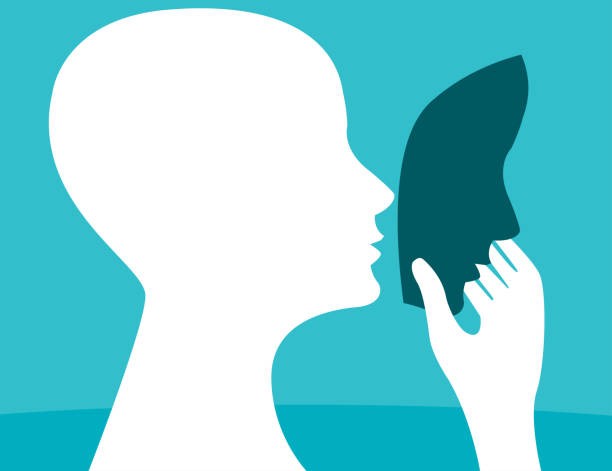
I’ve been a designer long enough to admit this truth; I’ve questioned my skills more times than I can count.
There are days I open someone else’s portfolio and wonder if I even belong in this field.
If you’ve ever felt that way, welcome. You’re not alone.
That feeling, the quiet voice that says “You’re not good enough” has a name: imposter syndrome.
And in design, it’s almost a rite of passage.
1. What Imposter Syndrome Feels Like in Design
For me, it started early, when I’d scroll through Dribble, Pinterest, or X-twitter and see perfectly crafted UI shots, brilliant typography, or motion designs that felt lightyears ahead of mine.
My reaction?
Not admiration.
Panic.
I’d look at my own work and think:
“I’m behind.”
“Maybe I’m not cut out for this.”
“Everyone’s better than me.”
And yet, when people complimented my work or asked for advice, I felt like a fraud pretending to know what I was doing.
That’s imposter syndrome; the gap between how others see your ability and how you secretly see yourself.
2. Why Designers Are Especially Vulnerable
Design is an emotional profession.
We don’t just create; we express, solve, and communicate visually.
And because creativity is subjective, there’s no universal “right” or “wrong.”
That’s both the beauty and the curse.
Every designer works under constant exposure:
Feedback from clients
Comparison with other creatives
Public sharing of work online
The ever-evolving standards of design tools and trends
We live in a profession where you’re only as good as your latest post.
And that creates a loop of pressure to constantly prove yourself, even to yourself.
3. The Social Media Mirage
Platforms like Dribble and Instagram are double-edged swords.
They inspire but they also distort reality.
What we see are polished results, not the messy sketches, failed experiments, or sleepless nights that led there.
I used to scroll endlessly, comparing my WIP to someone else’s final masterpiece.
It took me years to realize: you can’t compare your chapter three to someone else’s chapter thirty.
Most of what we admire online are highlights not habits.
And it’s our daily habits, not the highlights, that define our growth as designers.
4. When Imposter Syndrome Shows Up
Imposter syndrome doesn’t announce itself.
It sneaks in quietly through small moments:
When a client asks for revisions and you think you’ve failed.
When you join a new project and feel lost.
When another designer gets recognition and you wonder if you ever will.
When you launch something and immediately see its flaws instead of its impact.
In my case, it often appeared when things were actually going well.
Success, strangely enough, triggered the fear of being “found out.”
I’d land a big project and immediately think,
“They’ll soon realize I’m not as good as they think.”
But over time, I learned that those feelings don’t mean you’re incompetent, they mean you care deeply about your craft.
5. The Hidden Advantage of Doubt
Here’s the twist: a little imposter syndrome isn’t entirely bad.
It keeps you humble, curious, and hungry.
The danger is letting it paralyze you instead of fuel you.
I started reframing my doubt as a signal, not a warning.
When I feel that inner critic whisper, “You’re not ready,” I now hear:
“You’re entering a new stage of growth.”
Because you don’t feel like an imposter when you’re doing what’s comfortable.
You feel it when you’re growing beyond your comfort zone.
6. What Helped Me Overcome It (Mostly)
I don’t think imposter syndrome ever fully disappears but it becomes manageable.
Here’s what’s worked for me:
a) Document, Don’t Compare
Instead of comparing my work to others, I started comparing my today to my yesterday.
When I scroll back to my old projects, I see proof of progress and that’s real confidence.
b) Learn Publicly
Building and sharing my process online helped me replace fear with community.
When you share your journey, you realize others are struggling too, often with the exact same doubts.
c) Separate Identity from Output
I stopped letting my work define my worth.
Some designs will flop. Some clients won’t get it. That doesn’t make me a bad designer.
It makes me human.
d) Find Creative Peers, Not Competitors
Design is not a zero-sum game.
Someone else’s excellence doesn’t reduce yours, it expands what’s possible.
e) Celebrate Small Wins
Finished a project? Learned a new shortcut? Improved your workflow? Celebrate it.
Momentum builds from micro-wins.
7. When Clients Trigger Imposter Syndrome
Sometimes, imposter syndrome doesn’t come from other designers, it comes from clients.
You’ve probably felt it too:
The client who micromanages your every pixel.
The one who questions your rates.
The one who says, “My cousin can do this cheaper.”
Early in my career, those moments cut deep.
I’d internalize them as proof that maybe I wasn’t worth my rate or reputation.
Now, I understand something simple: confidence and competence are two separate skills.
Clients often sense confidence before they see competence and design, like business, runs on perception.
So I started designing not just visuals, but confidence systems onboarding, process, communication that reflected my value.
When you design how you present your work, you design how others perceive your worth.
8. The Role of Education and Constant Learning
Imposter syndrome often thrives in stagnation.
When you stop learning, you start doubting.
Design evolves fast; tools, principles, and platforms shift monthly.
So I made learning part of my routine: studying UX flows, watching design breakdowns, reading brand strategy books, and testing new tools.
Knowledge silences insecurity.
Not because you’ll know everything but because you’ll know enough to trust your process.
9. Advice I’d Give My Younger Self
If I could speak to the version of me who doubted his every move, I’d say this:
Everyone’s figuring it out, even the ones you admire.
You’ll never “arrive” in design. You’ll only evolve.
Your insecurity doesn’t disqualify you; it humanizes you.
Keep creating, even when you’re unsure. Especially when you’re unsure.
Perfection is a moving target. But progress is always within reach.
10. Why I Still Feel It Sometimes
Even now, after years of designing websites, brands, and creative systems, I still feel imposter syndrome.
When I pitch to a big client.
When I try a new style.
When I’m about to post something that feels too vulnerable.
But here’s the difference:
Now, I don’t run from it. I use it.
Imposter syndrome reminds me that I’m still stretching, still learning.
And that’s where growth happens.
11. Turning Imposter Syndrome Into a Creative Edge
When you feel like an imposter, you’re often more aware, more attentive, more curious.
Those are powerful creative traits.
So instead of trying to “get rid of it,” I’ve learned to design around it.
I use it to:
Ask better questions during projects.
Push myself to experiment.
Stay grounded in empathy, because I know how it feels to struggle.
In the end, imposter syndrome became the teacher I never asked for but one I desperately needed.
If you’ve ever felt like you’re faking it, remember this, every great designer has.
The difference is, they kept creating anyway.
The real imposter isn’t the one who doubts.
It’s the one who stops because of doubt.
Keep going. Keep designing.
Confidence doesn’t come first, it’s built through repetition.
And if your work ever feels “not good enough,” take a deep breath and remember:
That’s not failure.
That’s proof that you still care.
Author’s Note
I’m Elvis; a web and graphic designer who’s been through the doubt, the comparison, and the growth.
If you’re navigating imposter syndrome in your creative journey, I’ve been there.
And I help brands and designers alike build clarity, confidence, and trust through thoughtful, human-centered design.
Because great design doesn’t start with confidence.
It starts with courage.