Pessimism Is Easy. Creation Is Hard.
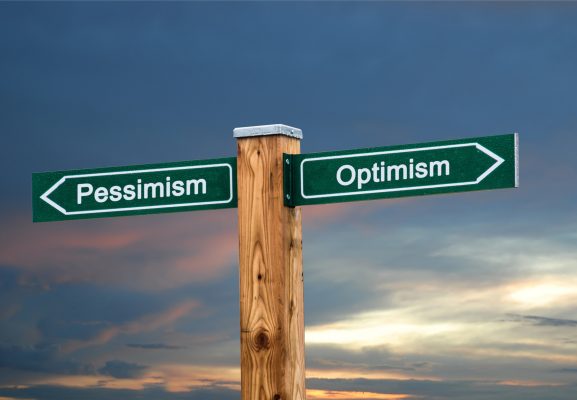
The world has never lacked pessimists.
Every generation produces people convinced that things are falling apart; that civilization is fragile, progress is temporary, and catastrophe is inevitable. Their arguments often sound intelligent. They speak carefully, predict decline, and point out flaws in everything around them.
And yet, history has a strange pattern: pessimistic predictions are often wrong.
Human beings continue solving problems that once looked impossible.
The reason lies in something pessimism struggles to account for: human creativity.
Pessimism assumes the future will resemble the present. Creation assumes the future can be improved.
And history tends to favor creators.
The Seduction of Pessimism
Pessimism is appealing because it requires little risk.
Anyone can criticize.
Anyone can predict collapse.
Anyone can point out the weaknesses in an idea, a system, or a society.
But building something is different.
Creation exposes you to reality. It forces you to test ideas against the world rather than against other people’s opinions.
This is why pessimism often thrives in environments where ideas are debated socially but never tested practically.
Predicting failure carries little cost.
Trying to build something carries enormous cost.
The Creator’s Mindset
Creators must believe something that pessimists rarely accept: problems can be solved.
Engineers must believe technology can improve.
Entrepreneurs must believe markets can grow.
Scientists must believe discoveries are still waiting.
Without this belief, creation would never begin.
This mindset is not blind optimism. It is practical optimism, the belief that effort can produce change.
The Roman philosopher Marcus Aurelius once wrote:
“You have power over your mind, not outside events. Realize this, and you will find strength.”
Creators understand this deeply.
They cannot control the world entirely, but they can influence part of it.
And sometimes that is enough.
Incentives Shape Beliefs
One of the most overlooked forces shaping human thinking is incentives.
People tend to believe ideas that are rewarded in their environment.
If pessimism earns attention, pessimism will flourish.
If optimism produces results, optimism will grow.
Consider two groups: intellectual commentators and entrepreneurs.
Commentators gain attention by diagnosing problems. Their job is to critique the world.
Entrepreneurs gain success by solving problems. Their job is to change the world.
These roles produce different worldviews.
Commentators often become pessimistic because their profession revolves around identifying what is broken.
Entrepreneurs tend to be optimistic because their livelihood depends on fixing what is broken.
Neither perspective is entirely wrong.
But only one produces progress.
The Difference Between Commentary and Creation
There is a quiet distinction between those who observe the world and those who shape it.
Observers analyze.
Creators experiment.
Observers discuss possibilities.
Creators test them.
Observers gain reputation through words.
Creators gain feedback through reality.
This difference matters because reality is a far stricter judge than public opinion.
Ideas that sound brilliant in conversation may collapse when exposed to practical constraints.
Conversely, ideas that appear unrealistic may succeed once someone attempts them.
Progress depends on people willing to run that experiment.
Human Progress Is a History of Solved Problems
Almost every modern convenience was once considered unrealistic.
Electricity.
Air travel.
The internet.
Vaccines.
Global communication.
Each of these developments began as an uncertain idea.
If pessimism had dominated completely, many of them would never have been attempted.
Human progress is not the absence of problems.
It is the continuous resolution of problems.
Each generation inherits challenges and gradually solves some of them.
Then new challenges appear.
This cycle continues indefinitely.
Why Optimism Is Harder Than Pessimism
Optimism carries responsibility.
If you believe improvement is possible, you must attempt to create it.
You cannot simply observe from the sidelines.
You must risk failure.
You must confront reality.
Pessimism avoids these burdens.
If you expect failure, you never have to attempt success.
This is why pessimism often feels intellectually comfortable.
It demands nothing.
Creation demands everything.
The Quiet Power of Builders
Despite the loudness of pessimistic commentary, the world is shaped by builders.
People designing new technologies.
People starting companies.
People conducting research.
People solving practical problems.
These individuals rarely dominate public debates.
They are usually too busy working.
But their actions matter more than predictions.
Civilization advances through thousands of small improvements made by people who believe improvement is possible.
Creation Is the Antidote to Cynicism
Cynicism grows when people stop believing their actions matter.
Creation destroys that belief.
The moment someone builds something; a product, a system, a company, a tool, they prove change is possible.
Even small acts of creation push the world forward.
That is why builders tend to remain optimistic.
They have seen ideas turn into reality.
They know the future is not fixed.
The Future Belongs to the Creators
Pessimists often dominate conversations about the future.
But creators quietly build it.
Human history suggests that while pessimism may sound persuasive, creativity tends to win.
Not because the world is perfect.
But because humans continuously attempt to improve it.
Creation is difficult.
It requires effort, risk, and patience.
Pessimism requires none of these.
And that is precisely why creation matters more.