The Silent Shrinking of Money: Understanding Inflation
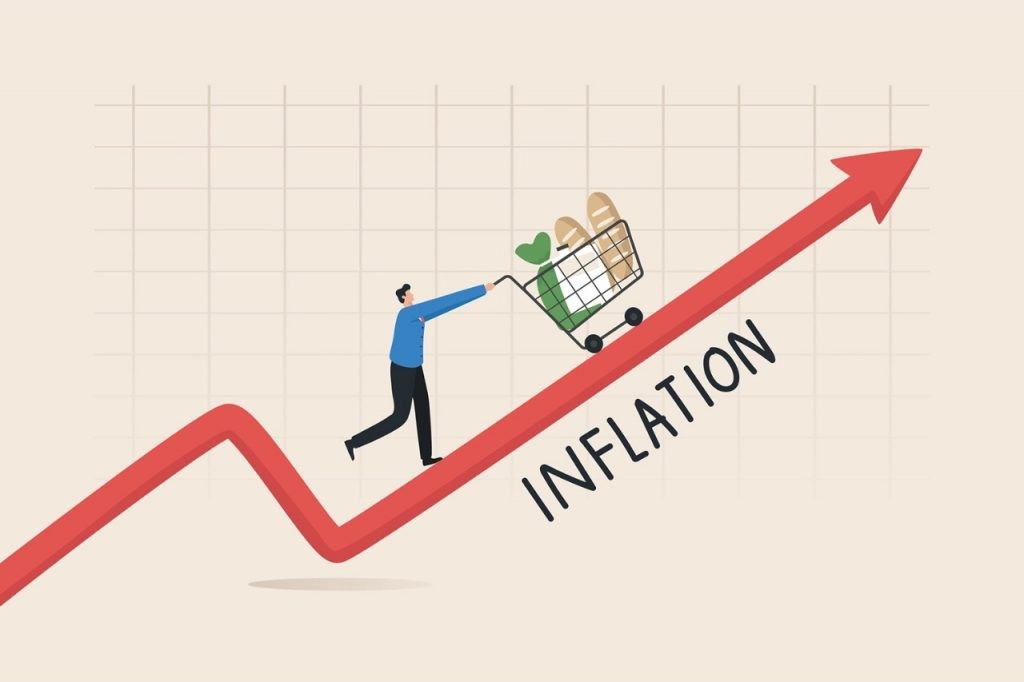
Last year, the same amount of money could fill a shopping bag. Today, it fills half of it.
No announcement. No warning. Prices just quietly increased. Rent went up. Fuel prices adjusted. Food became slightly more expensive. Transport followed. And suddenly, the money that once felt sufficient now can't satisfy all the needs.
That quiet shift has a name: inflation.
Inflation is the gradual increase in the general price level of goods and services over time. In simple terms, it means your money buys less than it used to. It is invisible. It does not knock on your door. But it changes how you live.
You may earn the same income. Your salary may not reduce. Yet your standard of living slowly declines. That is the silent power of inflation.
Inflation Is Not Just a Theory
In economics textbooks, inflation is often presented using graphs and percentages. But in real life, inflation is personal.
It is the student who realizes their monthly allowance no longer lasts the whole month.
It is the salaried worker whose transport cost rises but whose salary remains fixed.
It is the small business owner paying more for electricity, raw materials, and rent.
Inflation touches everyone, but not equally.
Those with fixed incomes suffer the most because their earnings do not adjust quickly. Meanwhile, asset owners; those who own property, stocks, or businesses, often see their wealth grow alongside rising prices.
Inflation, therefore, is not neutral. It quietly redistributes purchasing power.
Why Does Inflation Happen?
Inflation does not appear randomly. It is driven by forces within the economy. Understanding these forces helps us respond intelligently rather than emotionally.
1. Too Much Money in Circulation
When there is more money in the economy but the supply of goods and services remains the same, prices rise. More money chasing the same products pushes demand higher than supply.
This often happens when governments stimulate economies by increasing spending or when central banks increase money supply. The intention may be growth, but the side effect can be rising prices.
2. Rising Production Costs
If fuel prices increase, transportation becomes more expensive. When electricity costs rise, manufacturers pay more to produce goods. When raw materials become scarce, their prices increase.
Businesses do not absorb these costs quietly. They pass them on to consumers. The result is higher retail prices, what economists call cost-push inflation.
3. High Demand
Sometimes, people simply want more goods than the market can supply. When demand exceeds supply, sellers raise prices. This is basic market behavior.
Whether caused by supply shortages, global disruptions, or economic expansion, the outcome is the same: prices rise.
The Real Danger: Purchasing Power Erosion
The most dangerous part of inflation is not the rising prices themselves. It is the erosion of purchasing power.
If inflation is 8% per year, it means something that costs 100 today will cost approximately 108 next year. If your income does not grow by at least 8%, you are effectively poorer even if your salary remains unchanged.
This is where many people misunderstand financial stability. They assume that saving money in a bank account is enough. But if your savings earn 3% interest while inflation is 8%, you are losing 5% in real terms.
Your money appears safe. But in reality, it is shrinking.
Inflation punishes idle money.
The Psychological Effect of Inflation
Beyond numbers, inflation changes behavior.
People become anxious. They rush to buy goods before prices increase further. Businesses increase prices preemptively to protect themselves. Workers demand higher wages. This cycle can fuel even more inflation.
At a personal level, inflation forces difficult choices:
Do I reduce consumption?
Do I look for additional income?
Do I invest?
Do I take more risk?
Inflation exposes financial weaknesses. If someone has no savings, no investments, and no income growth, inflation hits harder.
It reveals whether your financial structure is strong or fragile.
Who Suffers Most?
Inflation does not affect everyone equally.
Salaried workers struggle when wages remain stagnant.
Students feel pressure when allowances fail to adjust.
Low-income households spend a larger portion of income on necessities like food and transport, which are often the first to rise in price.
Small businesses face shrinking profit margins due to rising operating costs.
Meanwhile:
Property owners may see asset values increase.
Investors in equities may benefit if companies adjust prices and maintain profits.
Borrowers with fixed interest loans may benefit because they repay loans with “cheaper” money over time.
Inflation creates winners and losers. The difference lies in positioning.
So What Can You Do?
You may not control national inflation rates. But you can control your financial response.
1. Invest Where Returns Exceed Inflation
The simplest rule in an inflationary environment is this:
Your money must grow faster than inflation.
If inflation is 7%, your investments should aim for returns higher than 7% to preserve and grow purchasing power.
Possible avenues include:
Stocks and equity markets
Real estate
Businesses
Government bonds with competitive yields
Inflation-linked securities (where available)
The goal is not reckless risk-taking. It is intelligent allocation.
If your savings earn 4% and inflation is 8%, your real return is negative 4%. But if you invest in an asset earning 12%, your real return becomes positive 4%.
That difference compounds over time.
2. Build Skills to Increase Income
Income growth is a powerful defense against inflation.
If prices rise but your earning power rises faster, you maintain control.
Investing in education, technical skills, digital skills, or entrepreneurship is not just personal development, it is financial protection.
Your ability to generate income is an asset.
3. Diversify Your Assets
Relying on one income stream or one asset class increases vulnerability.
Diversification spreads risk across:
Cash for liquidity
Investments for growth
Businesses for scalability
Tangible assets for stability
Balance is key. Too much cash during high inflation erodes value. Too much risk without knowledge creates instability.
4. Avoid Lifestyle Inflation
As income increases, expenses often rise equally. Bigger house. Better car. Higher consumption.
But if your expenses grow at the same pace as inflation, you remain financially exposed.
Controlling lifestyle inflation preserves margin. Margin creates resilience.
5. Think Long-Term
Inflation fluctuates year to year, but long-term investors who stay disciplined often outperform inflation.
Short-term panic rarely leads to wise decisions. Strategic patience does.
Inflation as a Teacher
Inflation forces awareness.
It teaches that money is not static. It teaches that savings alone are not strategy. It teaches that economic forces matter in daily life.
It also reveals a deeper truth: financial security is not about how much money you hold. It is about how effectively your money works for you.
Inflation rewards those who understand compounding and positioning. It challenges those who remain passive.
Inflation is not just an economic statistic published in reports. It is a silent force shaping how we live, plan, and build.
It determines whether your salary is enough.
It determines whether your savings grow or shrink.
It determines whether your future feels secure or uncertain.
You may not control inflation. But you can prepare for it.
Invest wisely.
Increase your earning capacity.
Protect your purchasing power.
Avoid leaving money idle.
Because in an inflationary world, standing still financially is not neutral.
It is moving backward.
And the difference between shrinking and growing is often not income level, but financial awareness and action.